
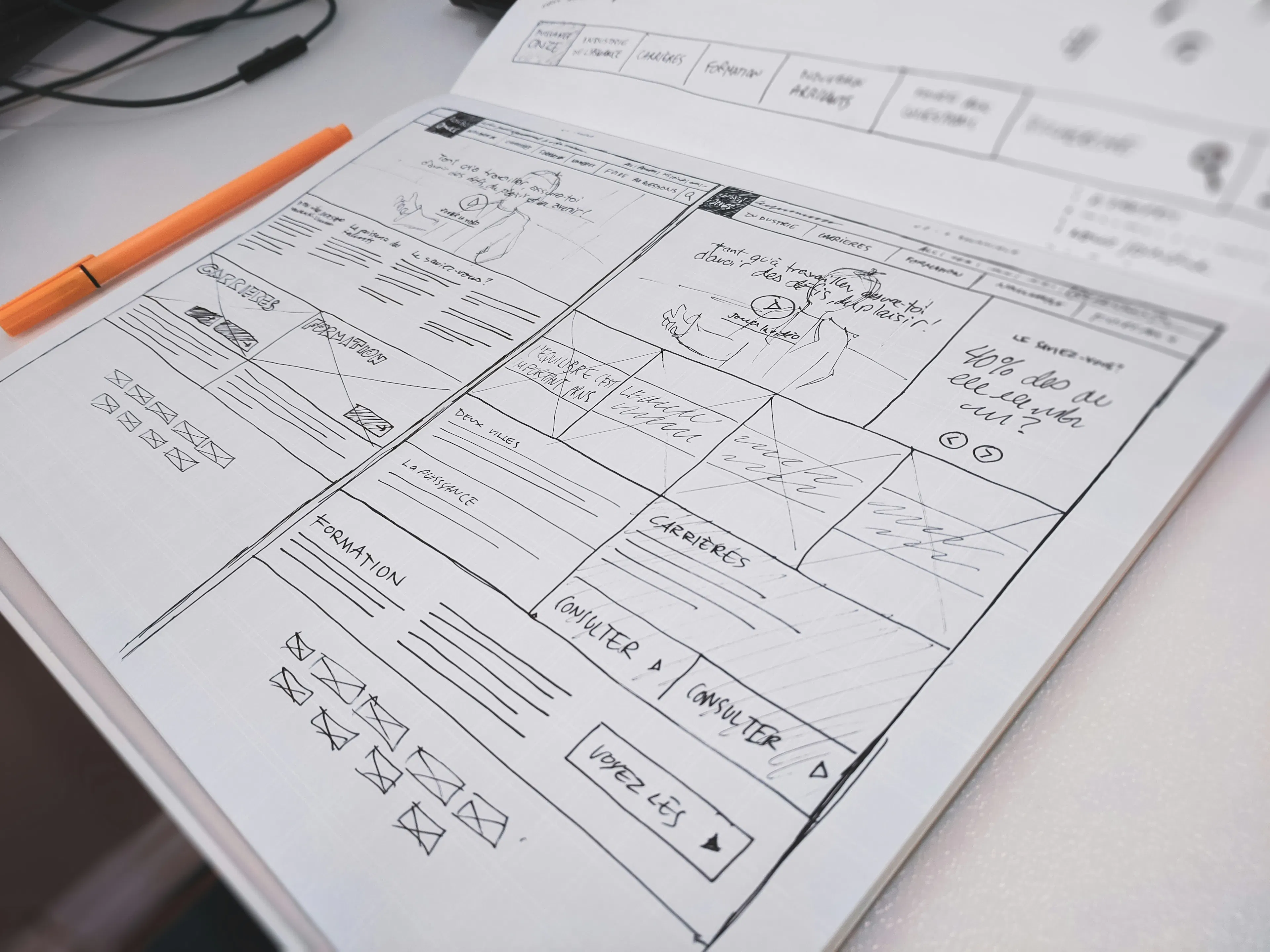
What delays a website most isn't design or code: it's content. When copy and photos arrive late, the design gets built around placeholder text and everything has to be reworked. Preparing content before the design starts saves weeks and gives a better result, for your customers and for Google.
What content does a website need?
At a minimum: a clear goal, a list of pages, the key copy for each one, the words people use to find you, your logo, real photos and some proof of trust, such as testimonials or projects. It doesn't need to be perfect; it needs to be clear. These are the six steps we recommend.
1. Define the goal of the site
Before thinking about colors or sections, answer one question: what do you want someone to do when they visit your site? Message you on WhatsApp, request a quote, buy or book a meeting.
Pick one main action. The whole site will be designed to lead people toward it.
2. List your pages
Write down which pages you need and, for each one, a single sentence on why it exists. For example:
- Home: explain what you do and for whom, in seconds.
- Services: give each service its own page and answer common doubts.
- Projects: show real work that builds trust.
- About: who's behind the business and why choose you.
- Contact: make it easy to reach you.
3. Write the key copy
You don't need every word of the site, but you do need the essentials:
- One sentence that explains what you do and for whom.
- A description of each service or product: what it is, who it's for, how it works and how long it takes.
- The questions customers ask you most often, with their answers.
- Your contact details, hours and social profiles.
No time to write? Record a voice note explaining what you do, who it's for and why clients choose you. It's a great starting point for the copy.
4. Think about how people search for you
Before you write, list the words your customers would use to find you on Google or when asking an AI like ChatGPT: the name of the service, your city and the problems you solve. Use them naturally in titles and copy. To go deeper, read our guide to basic SEO for a new website.
5. Gather logos and photos
Images do much of the visual work. Before you start, gather:
- A high-quality logo, ideally SVG or transparent PNG, in light and dark versions.
- Landscape photos at least 1600 pixels wide.
- Team photos with similar lighting and background.
- Photos or screenshots of your products, space and projects.
Stock photos can fill gaps (Unsplash and Pexels allow free commercial use), but your own photos build more trust.
6. Collect proof of trust
Before contacting you, people look for signs they can trust you. Gather testimonials (with permission), logos of companies you've worked with and projects with concrete results.
A site with real content from day one is designed better, launches sooner and converts more.
Website content checklist
- Goal and main action defined.
- List of pages with the purpose of each one.
- Main tagline and a description of each service.
- 5 to 10 frequently asked questions with answers.
- Keywords for each page.
- High-quality logo.
- Real photos of your team, space or products.
- Testimonials, client logos or case studies.
- Contact details, hours and social profiles.
Frequently asked questions
Who writes the copy for my website?
You know your business best, so ideally you provide the core information. We organize it, make it clear and optimize it for search engines.
How much text does each page need?
Enough to answer what the visitor is looking for. A service page usually works well with 300 to 800 words; the home page, with short sentences that lead to each section.
Can the design start before all the content is ready?
Yes, but you should have at least the goal, the list of pages and the key copy. That way the design starts from your real content, not from guesses.
In short
Define your goal, organize your pages, write the essentials, think about how people search for you, gather your images and collect proof of trust. With that ready, the design starts from your real content and your site goes live sooner.
